
Key Takeaways: Why You Need a Business Medical Aid Broker
- Reclaimed Hours: A broker acts as an outsourced benefits department, handling the hours of call-centre wait times and administrative follow-ups.
- Zero Additional Cost: By law, broker commissions are built into the regulated medical aid premium. You pay the exact same rate whether you use a broker or go direct.
- Clinical Advocacy: Brokers have the technical expertise to fight rejected claims—especially around Prescribed Minimum Benefits (PMBs)—that HR teams simply do not have.
- Compliance Control: Dedicated brokers ensure your monthly payroll deductions align perfectly with shifting SARS regulations and tax credits.
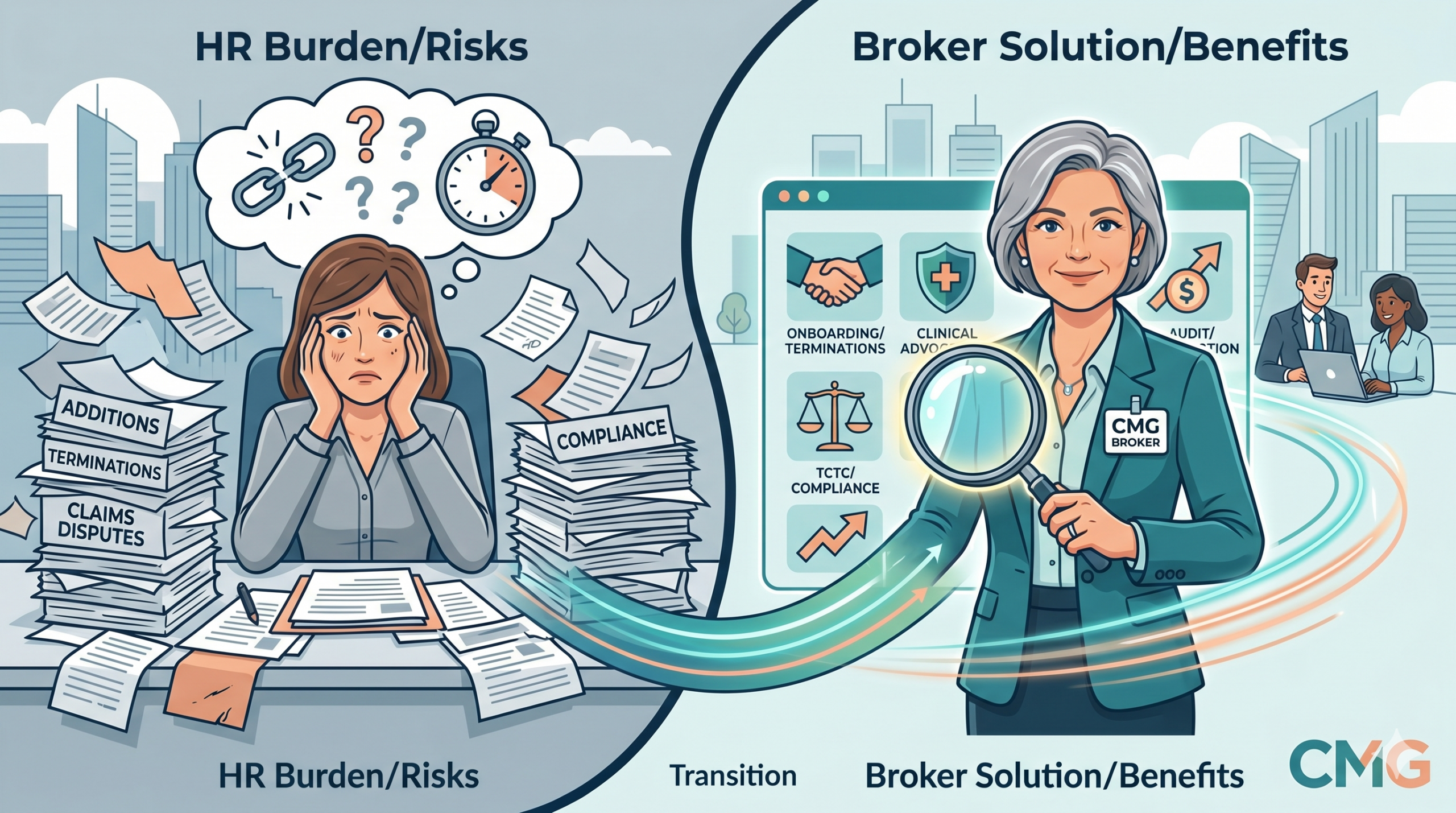
Most HR managers have a clearly defined set of core responsibilities. Negotiating rejected hospital claims with a medical scheme call centre is usually not one of them. Yet, when a company manages its corporate medical aid internally, that is exactly what happens.
We speak to business owners and HR leaders every week who are drowning in the administrative paperwork of healthcare benefits. Additions, terminations, billing reconciliations, and member disputes turn a valuable employee benefit into an operational liability.
Providing medical aid for employees should help you retain staff, not drain your HR department’s time. The reality is that managing this in-house introduces hidden risks to your business.
Why HR Should Never Be the Middleman for Company Healthcare
When an employee has a problem with their salary, they go to HR. When they have a problem with their health, they should go to a medical professional. But when a medical claim is rejected, they usually end up back at HR’s desk. This creates a bottleneck and exposes the business to several risks.
Risk 1: The Administrative Black Hole of Onboarding
Adding a new employee to a medical scheme is rarely as simple as filling out a single form. There are late-joiner penalties to calculate, waiting periods to navigate, and dependent histories to verify. When HR handles this directly, small errors in submission can result in an employee being denied cover when they need it most.
Debbie’s Insight: “I’ve seen HR managers spend three hours on hold just to find out an employee forgot to attach a previous membership certificate. We use direct administrator portals. What takes an HR team an entire afternoon takes our office five minutes.”
Risk 2: Losing the Battle on Claims Disputes
Medical schemes operate on strict clinical protocols. If an employee’s chronic medication or hospital authorization is denied, HR does not have the clinical or regulatory background to successfully appeal the decision.
This is where the concept of “information gain” matters in healthcare. Most employees—and HR staff—do not know how to leverage Prescribed Minimum Benefit (PMB) legislation.
Debbie’s Insight: “A classic example is PMBs. If a condition is a PMB, the scheme is legally required to pay for it in full, even if the employee’s savings account is empty. Schemes often auto-reject these claims because the doctor used a slightly incorrect ICD-10 diagnostic code. HR will usually tell the employee, ‘Sorry, the scheme said no.’ We don’t accept ‘no’. We get the doctor to correct the code, resubmit the claim, and force the scheme to pay.”
Risk 3: Compliance Blindspots and Tax Inefficiencies
The regulations governing group medical aid schemes change frequently. South African businesses must ensure that payroll deductions align with the latest SARS Medical Scheme Fees Tax Credits. If your finance or HR team miscalculates these deductions under a Total Cost to Company (TCTC) model, it creates a payroll compliance issue. A broker ensures your benefit structure remains strictly compliant with both SARS and the Council for Medical Schemes (CMS).
Risk 4: Blindly Accepting Annual Premium Increases
Every year, usually between September and November, medical schemes announce their annual contribution increases. Companies managing their own benefits often just accept these hikes, update payroll, and move on. This is a massive missed opportunity to manage your overheads.
Debbie’s Insight: “When a scheme announces an 8% or 10% increase, direct corporate clients just absorb it. We don’t. We actively review the group’s claims ratio. If the scheme is asking for 10% but the group is healthy and claims are low, we use that data to benchmark against competitors or restructure the internal subsidies so the company’s budget doesn’t break.”
Risk 5: Wasting Budget on Misaligned Plans
Employees rarely understand the technical details of their medical cover. Without guidance, they often select a high-end, expensive plan they don’t need, or a restrictive network plan that doesn’t cover their local doctor. This misalignment leads to frustration and wasted money. We consult directly with your employees, helping them select the right module for their specific life stage and health requirements.
The Economics of a Broker: Why It Costs You Nothing
The most common misconception among business owners is that using a broker adds an extra fee to the monthly overhead. In the South African healthcare market, this is factually incorrect. Using a medical aid broker is FREE!
Medical aid pricing is strictly regulated by the CMS. A scheme cannot charge you less for going direct. The broker’s commission (which is capped by law at 3% or a maximum flat rand amount per member per month) is already built into the standard premium.
If you do not use a broker, the medical scheme simply keeps that margin to boost their own profits. By appointing a broker, you are essentially claiming back an administrative resource that you are already paying for.
FAQ: Using a Broker for Medical Aid for Employees
Does a broker replace our HR department?
No. We work alongside your HR department. HR manages the internal company policy and payroll deductions, while we handle the external communication, plan structuring, and member support with the medical scheme.
What happens if an employee has a medical emergency after hours?
We provide your team with direct escalation contacts. Instead of an employee calling their line manager in a panic because a hospital admission is stalled, they contact our dedicated support structures to handle the authorization.
Can we appoint a broker if we already have an active group medical aid scheme?
Yes. You do not need to change your medical scheme or your employees’ plans to get broker support. You simply sign a standard broker appointment letter, and we take over the administration and servicing of your existing group immediately.
Stop Paying for Frustration
Your HR department’s time is too valuable to spend arguing with a medical scheme call centre over an ICD-10 code. By appointing Corporate Medical Group, you instantly gain a dedicated, expert benefits team that handles the paperwork, fights the claims disputes, and optimizes your annual spend.
Ready to get healthcare admin off your desk?
Contact Corporate Medical Group today. Let us take over the administration of your corporate medical aid so your HR team can get back to building your business.